Check out my other flashlight blog at: http://otherflashlights.blogspot.com/ More content coming soon.

Thursday, March 1, 2018

1994 Remember Sarajevo Mini Maglites

Summary: The "Remember Sarajevo" Mini Maglites were produced for use in the closing ceremony of the 1994 Lillehammer Winter Olympics and were intended to raise awareness of a growing military conflict in Tony Maglica's home country. They are one of five lights Maglite has produced as giveaways for historical events.

Mag Instrument has only produced a handful of "giveaway" or donation lights. These are special lights that are laser etched as part of a donation or promotion. These lights are highly sought after by collectors because of their rarity and history. I've detailed the George HW Bush and 2001 George W. Bush and 2005 George W Bush Inaugural Mini Maglites and the 9/11 3Ds. There is a 5th that I've been searching for and it is the 1994 Lillehammer Olympics "Remember Sarajevo" Mini Maglite.

In 1994 the Winter Olympics were hosted in Lillehammer, Norway. That year's Olympic games were fairly typical as far as the competitions go. However, at the end of the games there was a special closing ceremony that offered remembrance and hope for the site of the 1984 Winter Games, Sarajevo, Bosnia. Sarajevo was a booming town when it hosted the 1984 Winter Olympics but around 1992 it was be-seiged as part of the Bosnian conflict. Thousand of civilians were killed, displaced, and the city's infrastructure was bombed during the siege. The siege lasted almost 3 years, the longest in the history of modern warfare.

So why would Maglite produce lights for a Winter Olympics and conflict half way around the globe? Well, Tony Maglica was born in New York City but was raised in Croatia. At the time Croatia and Bosnia as well as handful of other states were all part of the former communist Yugoslavia. Tony loved his homeland but detested the communist government. He moved back to California near the end of his youth and started Mag Instrument. In the democracy of the U.S. his business flourished and he supplied flashlights to the world.

As the 1994 Winter Olympics was drawing to a close Maglite sent 40,000 AA Mini Maglites inscribed "1994 Lillehammer Olympics" and " Remember Sarajevo" to the closing ceremony as shown below. The lights were used during a the closing speech where a speaker offered hope for Sarajevo.


Like the George W Bush lights 40,000 were produced. So, why are they so rare today? Like other giveaway lights they came with batteries and like many other Maglites the batteries were not taken out before storage which destroyed the lights when the batteries leaked. Also, because all of the lights were sent to Norway they very rarely show up on the second hand US market. I see about 1 every year or 2 for sale and they never fetch more than $50 or so likely because most collectors don't know the history of them.

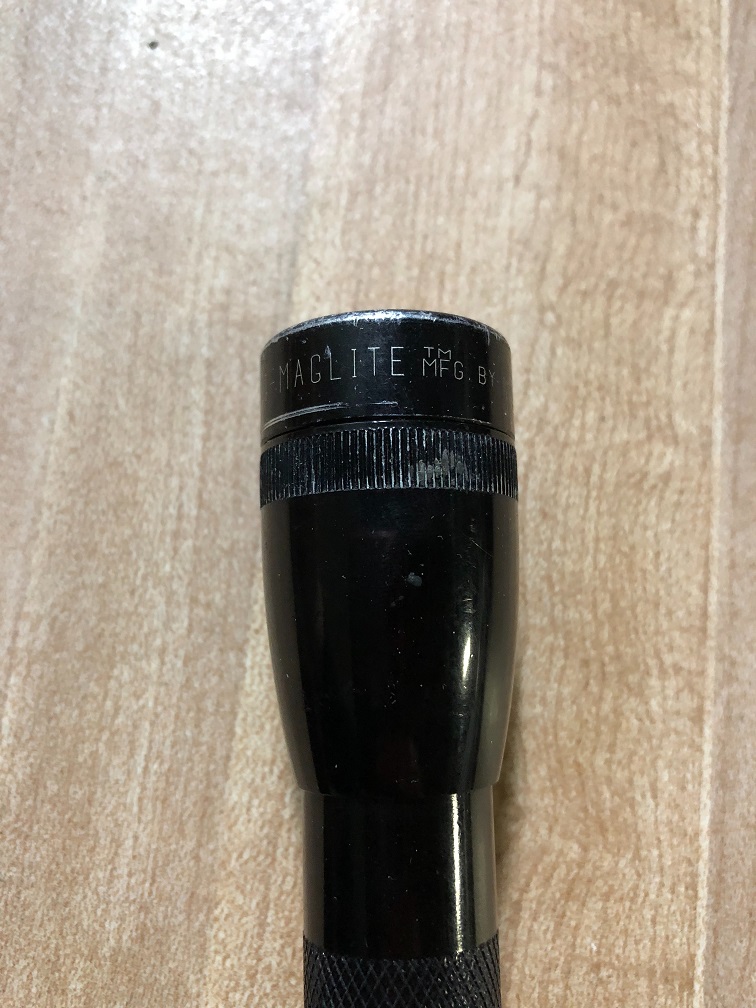
What's also interesting is that the head has TM after the panther logo. As per my Mini Maglite Dating Guide this is because the lights were produced in 1994 but the panther logo registered trademark wasn't approved until 1996.


UPDATE: I received a picture of a 2C "Remember Sarajevo" Maglite from a reader in Norway so I wanted to post it along with some info. This is basically an up sized version of the AA "Remember Sarajevo" Mini Maglite. It is one of the few lights displayed on my blog that I don't own. From what I can gather these appear to have been made for VIPs attending the Lillehammer event and were likely made in only very small numbers. I would love to be able to purchase one eventually so if you have one or know where I might be able find one please don't hesitate to send me an e-mail. My contact info is at the right.


As always I'm looking to buy Vari-Beams and Vintage/Rare Mags. Please let me know if you have any, top dollar paid.

Saturday, February 24, 2018

1979 Test Color Lights

Summary: Maglite started production in 1979. During the first year of production Maglite put out some "test batches" of different color anodized lights to see how the anodizing process worked and how well the lights sold. These examples are extremely rare today and a few examples are shown below.

I knew that I'd probably add to the Maglite knowledge base over time and that my last post might not really be the last. However, I didn't think I'd run across such rare lights so soon.

I have some good contacts with some ex-Maglite employees and one of them is from the very early days. From time to time I am fortunate enough to acquire some very rare and one-off lights. One of these lights that recently came into my possession is hands down the rarest Maglite I have seen and one of the oldest. It is also a super interesting peek into Maglite's early days and their very early R&D. So what is it?


It's a 1979 Burgundy 4D, serial number 932. 1979 lights have many unique features due to the design still being a work in progress. I've posted about these features before but this light goes a step further as it is even earlier in the Maglite R&D process. This light has many previously unseen features. For starters it is the second lowest serial D cell, and second oldest Maglite I've ever come across, the oldest being a 1979 2D that I also own. I previously did a post about the oldest NIB Maglite and this light has an even lower serial. I've discussed some of the difficulties in dating the very early serials in that post but I do believe this light to be the oldest Maglite for several other reasons.


Unlike other early lights this one has the word "Patent" spelled correctly. As per my D Cell Quick Dating Guide, and based on every other light I've seen, all early lights had the word "Patent" misspelled as "Paten". I've heard several stories about this but haven't been able to confirm or deny any. Some say it was Tony Maglica's broken English from have grown up in Croatia. I've also heard it was because the original stamping machine didn't have enough characters. Another less interesting, but more plausible story is that it was just a common oversight because spell check was nonexistent in 1979 and by the time it was caught thousands of barrels were already stamped and the patent was approved. I believe that this light was a prototype light that was hand tooled by either Tony or Don which is why the spelling is correct. Mag Instrument has subcontracted various phases of production during the early days and when they were very busy which has contributed to a great variety of finishes and features of lights. This is a fairly common practice across many industries. Only the earliest lights, likely before serial 1,000, have "Patent Pending" spelled correctly.


The most obvious difference between this light and a standard production light is its finish. This is a non-standard finish and was only produced on this one light. It is officially "Burgundy". It is shown above compared to the standard Red finish on a 1990 Transitional light.  This finish is an interesting look into what could have been on early Maglites. It was a finish done to examine how different red anodizing would appear and unfortunately this beautiful Burgundy finish wasn't chosen as a standard color for Maglites. This single example was kept and used by the Mag Instrument employee until very recently.

I also recently found a 1979 Blue 2D. Before I found this light and the Burgundy light I was under the impression that only black lights were produced during the first year. The original owner of this light lived very close to Ontario, CA where Mag Instrument is headquartered, and told me this light was from a test batch that Mag did to see how well the anodizing process worked and how well the lights would sell. I confirmed this through the original owner of my Burgundy light who worked at Maglite in the early days.


Maglite also did another test finish that was rather surprising and is seen below. I know silver didn't come out until the later 80s. The serial is right around 10,000 which puts it even earlier than the black 1979 2D I have. Both are pictured below along with a pic of them in my collection. The light is not faded but is a very light blue, almost silver.


I've also run into a third very early and surprising light. I always welcome e-mail from other collectors and just really anyone with a good Maglite story or question. My contact info is at the right if you want to get in touch. A little while ago I was contacted by someone whose grandfather left him a Maglite. The Maglite sounded super interesting and unlike anything I've ever seen before.

It's a 1979 Gold 4D. This light is Maglite's attempt to see how gold anodizing worked long before they made production models in 1989. Like the owner of my blue light the original owner of this light also lived close to Ontario, CA. The gold finish came out great and my contact from the early days of Maglite says about a dozen were produced in various lengths to test the anodizing process and its effect on the lights. Once complete they were packaged up and sold to re-coup some of the R&D cost. Unfortunately they didn't sell well even though they are some sharp looking lights.


The serial number is a very low 1,935 and is the fifth lowest D cell serial number I've seen or heard of. This is the only light I've posted on my blog that I haven't owned and the pictures are courtesy of the grandson of the original owner. I don't imagine he'll ever sell it and it's so rare that I had to find a place for it in one of my posts.

I should note that Maglite did later experimenting with "test finishes". One of these lights is a camo light that I've detailed in this post for those that are interested.

As always I'm looking to buy Vari-Beams and Vintage/Rare Mags. Please let me know if you have any, top dollar paid.

Wednesday, February 7, 2018

Mini Maglite Quick Dating Guide

I've been saying I was going to do a Mini Maglite Dating Guide for a while and I haven't posted in months now because I thought I covered all of the info I had. But I had some requests to do this post as well as post a pic of my entire collection so this may be my second to last post. This covers Incandescent AA Mini Maglites only. Most of the new LED ones have serial numbers and are easily dated by Mag Instrument.

So, on to Part 3, for those wondering: How old is my Mini Maglite?

The D Cell Quick Dating Guide can be found here.
The C Cell Quick Dating Guide can be found here.

AA Incandescent Mini Maglites are not stamped with serial numbers so Mag Instrument will not identify a date of production like they will with C and D cells. However, with a little research on Patent and Trademark dates you'll find that the lights fall into 1 of 5 generations with the biggest difference being the logo on the bezel.

1984
Stamped Bezel with White Paint Fill
Mini Maglite TM MFG by Mag Instrument - Ontario, Ca. - USA


The stamped bezel resulted in a lot or QA/QC issues due to the small size of bezel. As such the production cost was very expensive and this bezel was only used for one year, 1984. These are the rarest Mini Maglites and had the least color variations. I've previously covered these in my Early Mini Maglite History post. I have only seen the following colors:

Black
Red
Blue
Camo
Silver
Pink
Bronze (Extremely Rare, Special Order for Zimmerman, a Swiss retailer)
Gold Plated over Brass (Done as a Christmas special for various retailers)


1985
Laser Etched Mini Maglite TM Bezel
Mini Maglite TM MFG by Mag Instrument - Ontario, Ca. - USA


These were only produced for a year or less and I haven't seen any color variations. It's likely the prior colors were still sold in the old style stamped bezel since they were far less popular than black.

Vari-Beam AA Mini Maglite was also produced in 1985. (1985 was the end of the Vari-Beams and before they ended production Maglite made only 1,000 or so AA Vari-Beams. These are extremely rare.)

1986 - 1991
Laser Etched Mini Maglite R Bezel
Mini Maglite R MFG by Mag Instrument - Ontario, Ca. - USA


The Mini Maglite Trademark was approved in April 1986 so the TM was changed to R. These lights came in many colors.

1992 - 1995
Laser Etched Panther TM Bezel
Panther Logo TM Mini Maglite R AA Mag Instrument - California, USA


The Panther logo debuted in 1992 on the larger lights but the Trademark wasn't approved until 1996 so a TM appeared next to the Panther logo. AA was added to avoid confusion between the AAA Mini Maglites that were introduced in 1988. Ontario, CA was changed to California, USA to avoid confusion with Ontario, Canada where consumers sometimes thought the lights were being produced.

1996 +
Laser Etched Panther R Bezel
Panther Logo R Mini Maglite R AA Mag Instrument - California, USA


The Panther logo Trademark was approved in 1996 and an R appeared after the Panther logo instead of the TM. These lights are the most common and have the highest color variation. They are perhaps the most collectible.

As always I'm looking to buy Vari-Beams and Vintage/Rare Mags. Please let me know if you have any, top dollar paid.

Friday, October 13, 2017

2002 to 2009 2D Hummer Lights

Summary: Maglite partnered with many 3rd parties over the years to produce licensed lights. One such example is a light they made for Hummer which came in a tool kit with their SUVs.

I have a couple previous posts about special Maglites that Mag Instrument made for auto manufacturers. They include both Chevrolet and Ferrari. Another example is the 2D special edition light Mag Instrument made as part of the service kit for model year 2003 to 2009 Hummer H2s. Like the Maglite the Hummer is both rugged and dependable so the match was a good fit. Most folks buying these trucks were paying a premium for this vehicle and valued extras such as the service kit and other luxury features. Shown below is my 2D Hummer light.


This light is a standard 2002, serial number 20,608,805, from the first model year of the Hummer H2. It is easy to tell because it is stamped "Patented Made in U.S.A.". Lights form 2003 and after were stamped "Patented in U.S.A." due to an obscure California law. For those interested in these features and dating lights please see my D Cell Quick Dating Guide. As far as I know these lights were all 2Ds and silver with the laser etched Hummer logo near the end cap. I am not sure if they came with the Hummer H1s or H3s so if someone does I'd appreciate you dropping me a line. My contact info is at the right. Shown below is a light, not mine, in its original service kit that also included a tire gauge, Leatherman tool, and first aid kit.


Hummer H2s were produced from 2002 to 2009 as model years 2003 to 2009 and were ultimately discontinued during the 2009 financial crisis as GM was forced to scale back and the market lost it's appetite for large, expensive, SUVs. The Maglite lives on in many incarnations ad I hope to see some special editions one for other vehicles too. All in all about 150,000 Hummer H2s were sold so I imagine a similar number of Maglites were produced and included with them. These lights are not very rare but are still a cool collectible that can be had for under $20. Shown below is the 2003 model year Hummer that this light came with.


As always I'm looking to buy Vari-Beams and Vintage/Rare Mags. Please let me know if you have any, top dollar paid.

Friday, October 6, 2017

1979 to 1982 7D Lights

Summary: 7D lights were made from 1979 to 1982 and were very slow sellers due to their size and minimal increase in light output over other models. They are the most desirable Maglites today among collectors.

I get the question a lot: What is your favorite Maglite? or Which Maglite do collectors want the most? The answer is without a doubt the 7D and as I near the end of my collection and the information I have, I figured I'd make a post on them.


For a while most folks online thought the 7D was an urban legend and didn't exist. That's not true although they are one of the rarest and most sought after Maglites. Most folks that aren't into Maglites have heard of them and they fetch the highest price out of most collectible lights. Maglite only made them for 1979, 1980, 1981, and early 1982 before they were discontinued and only produced around 19,000 total.  They were likely discontinued around August of 1982 based on some sales literature I've seen including old Cabela's catalogs. Like most other old lights many had the batteries corrode in the barrel after they were left sitting and are no longer around. Now they are at least 36 years old and finding one is very difficult but not impossible.

Maglite discontinued these lights for a lot of the same reasons as other lights. They were a slow seller. They were mainly a slow seller due to their size. Lights of this size are very tough to carry and are very heavy. Shown below is a picture next to my forearm. I'm 5'9", a pretty average height, so you can see this light is YUGE!


It isn't a whole lot longer than a 6D, which is still produced. You can see both my 7D and a 92 to 95 Panther 6D in the picture below. Overall length on the 7D is 22" and the 6D is 19 1/2". Unfortunately the 7D doesn't have many advantages over the 6D. The original Vacuum/Argon PR Base Bulbs were designed for automotive use and didn't really match up too well to D cells. As such, the 7D, PR20 bulb put out the same amount of light as a 6D, PR18 bulb and the run time was only marginally better. Later on Krypton bulbs came out and the 7D, KPR120 bulb put out 151 lumens vs 100 for a KPR118 but the 7D was already discontinued by this point. I have specs and descriptions on all of these bulbs in my post about PR Flange Base Bulb Specs.


The other question I get a lot is why did Maglite produce the 7C until 1990 when the 7D was discontinued after only 4 short years? I think the picture below speaks for itself. It shows a 7C vs. a 7D. The 7C is much shorter. In fact the 7C is shorter than a 6D. I have a few 7Cs that I've covered and below are pics showing a 7C vs. a 7D.


Believe it or not longer lights have actually existed. Kel-Lite had a very short lived C cell BTL-26 baton light which was the equivalent of a 12C. The light had a spacer in it that knocked it down to a 5C and it was designed to be used as a baton by law enforcement. It's overall length was around 26" hence the BTL-26 model name. This made the Kel-lite Baton Light 4" longer than the 7D Maglite. I have one of these and I've included a picture below with some of my longest lights, and the longest lights I know of.


From top to bottom they are:

7D Maglite
6C Maglite with ASP Baton
This collapses and it's aftermarket so while it's technically longer extended I don't count it as the longest light. It could be installed on a 7C for an even longer light! It is 30" long extended.
BTL-26 Kel-Lite
7C Maglite
3D Vari-Beam for scale

At the end of the day the 7D was not a great self defense tool because it required far too much effort to swing and was very rough on the wrist. Were they intimidating? Sure, but that's about it. They would have also been very cumbersome on an officer's duty belt. I've always preferred a 3 or 4D for self defense. They'll provide all of the oomph needed while still being manageable to carry and swing. Use of flashlights as a defense tool is now frowned upon in most departments and small Streamlight Stingers and Surefires have all but replaced Maglites and Kel-Lites.

I also figured I'd throw in a few more pics for your viewing pleasure. Shown below are two of the rarest Maglites in my collection. They are also on opposite ends of the size spectrum. The Marquis (Solitaire) is the smallest light Maglite makes, an AAA, and the 7D was the largest Maglite made. For those interested in the origin of the Marquis please check out my post about it.


The serial number is 70008675 as shown in the above pic. This looks like a low serial but all other D cells surpassed this number early on in their first year. This is a 1980 light as can be seen by its "Paten Pending" stamping below so the light is not as early as the serial suggests. I put out a D Cell Quick Dating Guide that explains the differences from year to year and how to date lights. The highest serial 7Ds I've seen are 18,000 and they are stamped "Patented Made in U.S.A.". This corresponds with about 4,500 lights sold a year which is a very low number. It's far lower than 7Cs which were the next lights to be discontinued in 1989. Interestingly enough due to their value now several collectors have made inquiries into Mag Instrument to resume production. Mag Instrument actually will but requires an order of 10,000 lights. Even at the wholesale price of $15 per light you'd be looking at an $150,000 order. Given the limited collector demand I doubt anyone would place such an order. 


Like most lights I buy and collect I always try to get a backstory where possible. Some I am not able to get a backstory on but this one I was and I am very glad because it's a light I was chasing for a long long time. I purchased this light from its original owner on a large auction site. He purchased it from a firearms store in the early 80s before a camping trip. However, he found it to be very unwieldy so he stored it, luckily, without batteries, and purchased a 4D instead. The light sat for many years before he decided to sell it. The light would be nice for warding off critters on a camping trip but that would be about it.

I've seen these 7Ds also produced in blue, red and gold. As with most larger lights the finishes are very rare. I've only ever seen 1 blue 7D, 2 red 7Ds, and 1 gold 7D and they almost never come up for sale. In fact I have heard from fellow collectors that the finishes were never done for retail sale. They were likely only done for Mag employees or for "test runs". I almost never post pictures of lights that aren't mine on my blog but a fellow collector sent me the pic below of a red, blue, and gold 7D all in one pic. It is so amazing I couldn't help but post it here. He was very tight lipped as to the back story but I suspect they were acquired from a Mag employee similar to other one off lights I've acquired.  


So, the big question! What are these lights worth? As of the posting date I've seen them go for between $200 and $400 depending on age, demand, and condition. They aren't the rarest Maglite but they are the most expensive.

Shown below are pics of my full 7 cell collection which includes 4 - 7Cs and 4 - 7Ds. The top 7D is a 1979 model and is very rare. It has a later lanyard ring end cap but otherwise it is all original and has faded to a really cool purple. The others came from owners in the mid-west where these lights were somewhat popular due to their extended run time. With a fresh set of D cells these lights may not have been super bright but they could run for 11+ hours. As with other 7Ds these have seen only marginal use and have little wear. I've owned a handful of others too over the years that I've traded off or sold to folks that are interested in them or wanted one for nostalgia purposes.


I also wanted to clear up another urban legend in this post. I see from time to time folks talking about Maglite having made an 8D, 10D or even larger lights. That is simply not true. I've spoken with ex Maglite employees as well as numerous other collectors and there is no record of larger lights being produced even by a special order. In fact if you take a look back through flashlight history you'll see lights up to 7 cells but never any larger. Longer, yes, but more cells, no. This is because brightness and run time just did not increase with the old style PR bulbs.

Some online retailers do sell extension tubes for D cells and C cells that will allow for the use of extra cells. These lights were popular around 2007 when adding more alkaline or lithium cells allowed for use of very bright industrial incandescent bulbs that were popular with hobbyists. These extension tubes are still sold but have little use since LED lights have become available. They are still purchased though and every now and then you'll see one installed on a light that is advertised as a 10 or so cell Maglite. A quick check of the first digit of the serial number will tell you what the actual size is of the light.

In fact I've actually made a 7D from a 5D before I was able to find one for my collection. From time to time I still make them for folks through my blog. You can make one at home too if you don't have the money for a 7D or don't want to spend the time searching for one. Just pick up a new style 5D incandescent light and a 2D extension. I like the one from Adventure Sport as it is inexpensive and the fit and finish are perfect. You'll also need to swap the 5D bulb for the correct, PR20 bulb, or a 6D bulb that can handle the correct voltage. Shown below are some pics of my "new 7D" before and after assembly along with a true 7D and my old 2001 6D.


As a side note this will probably be one of my last regular posts since I'm only hunting for a couple of lights and I've posted my entire collection. 53 posts over the last 6 months have gone by so fast. I started this blog to post a couple of the cool lights from my collection but wound up posting all of my lights and all of the knowledge I have from the last 7 years of collecting Maglites. I have had some requests to show a shot of my whole collection and I'm also sure I will come across some other interesting lights and tidbits of Maglite history in the future. Until then I'm going to round it out with this post. So long and thanks for tuning in!

As always I'm looking to buy Vari-Beams and Vintage/Rare Mags. Please let me know if you have any, top dollar paid.

Sunday, October 1, 2017

Personalized Lights

Summary: Some Maglite owners personalize their lights with engraving and accessories. Shown below are some of the more interesting ones I have in my collection.

As I've previously covered Maglites were at one time very costly and were priced at over $100 in 2017 dollars. They were a premium light and the choice of professionals. As such many folks spending this much money on a light took great pride in them and opted to customize them to make them their own. I always collect interesting and rare Maglites and I enjoy the personalized lights too especially when they come with a story. I've collected several over the years that are shown below. Lights were personalized in a variety of ways through engraving and modification and really speak to the owner's profession and intended use. They are an interesting take on otherwise standard models.


Some of these lights were professionally engraved, most likely by a gun engraver or gunsmith. One of these is the 6D is a 1979 light and I briefly covered it in my earlier post. It has a very low serial number of 3,207 and was professionally engraved with the owner's name. The owner was a trucker and purchased it during the summer of 1979 while in California. He carried it for many years before retiring it. It is well used and must have some fantastic stories. It was restored and sold to me by a fellow collector after a battery was stuck in it. The longer lights were popular among truckers for checking air pressure in tires, removing snow and ice, and occasionally self defense.


The red 2D belonged to a mid-western fire marshal who carried it for many years on inspections and investigations. The light is very well worn and was likely originally purchased because it was red and easy to find in a cluttered truck or office. The red worked well for fire fighters in general. It is scratched, nicked and has been dropped countless times but still operate flawlessly. It has faded to a really cool shade of pink over the years. It is an R bezel 1,400,000 serial which puts it between 1987 and 1989.


I've also briefly covered the 3D at the end of my 5D restoration post. It is stamped "Paten Pending" making it a 1980 model from the second year of Maglite production. It is serial 63,798 and was purchased at an estate sale from a wealthy Tennessee family who owned a large construction business. It was the wife's personal light and oddly enough was engraved with her driver's license, social security, and phone number which I have blacked out for the pictures. In the 1980s identity theft wasn't much of a concern and it may have been handy to have this info on a light that was carried everywhere. This light was surely highly valued by it's owners and was only gently used during family camping trips and outings.


The black 2D has an extra special engraving and was owned by the owner of a sporting goods store in California. It is shown below with some ads for the store from 1981. The owner was so impressed with the stock of lights that he bought for the store that he ordered a 2D and had it engraved with his last name. The light is in fantastic shape and the engraving is still crisp. It is a 1980 Paten Pending model as well. I was also able to purchase some NOS, new old stock, lights from the owner. They are a very early red 3D and a very rare 7D as shown below.


This blue 4C is a very special light although I didn't manage to get a backstory behind it. C cell finishes are very rare, especially older ones. I've only seen one other TM bezel finish and that was in silver. An early Mag insert from 1982 to 1986 makes mention of blue 2C - 4C lights although this is the first early blue C cell I've ever seen from that time. What's even more curious is that the personalization is laser etched and not engraved. Laser etching did't come about until the late 80s so that was definitely done at a later date. The light came from Temple City, CA which is only a couple miles away from Mag's headquarters so I'm going to guess that this light was owned by either a Mag employee or a close associate of Maglite. I got it from an estate sale but the seller didn't have any info on the prior owner and a search online didn't turn up much. This is one of my favorite lights in my collection and looks brand new and unused.


Of course police officers also personalized their lights too. Many officers carried the same Maglite models and even with their unique serial numbers the lights were sometimes mixed up. Shown below are two examples of "Cop Lights" that I have. One is another 1979 light but this time it's a 5D and it was owned by a Chicago police officer who routinely carried it on duty. It is serial 14,033. The other is a 1983 5C light, serial 29,898, and was from an officer in Massachusetts who used it both on and off duty. Some lights like this were engraved with the officers badge number. 5 and 6Cs were discontinued in 2003 and I did a previous post on them.


As I've covered before, and as the title of my blog alludes to, Maglites were far more popular among the tradesmen and outdoorsmen than with law enforcement. Only a few of the lights I own were from law enforcement. 90% of them came from another profession or were used for personal use even though most folks think of a Maglite as a "Cop Light". Interestingly enough many lawmen preferred C cells over D cells as they were closer in size to the batons they were used to carrying. As I've covered in my other blog C cells at one time greatly outsold D cells when aluminum Kel-Lites were first introduced in the late 1960s. The legacy law enforcement market is likely the only reason Maglite continued to produce C cells for so long.

The 2D light shown below is a great example of Maglites being used for other professional purposes. It belonged to an aircraft mechanic stationed at Norton Air Force Based in Southern California. It is like many other early lights that were distributed near Mag Instrument's headquarters. It is serial 787,508 and is from approximately 1987 based on its features as can be found in my Quick Dating Guide. In addition to the engraving with name, rank, and other info it has also been personalized with a lanyard ring style end cap. The metal eyelet is aluminum and doesn't appear to be a standard part so it is pretty likely this mechanic used an airplane part and his mechanical skill to fashion this lanyard ring. The lanyard is also sewn over on itself showing that someone took a lot of pride and put a lot of time into making this light their own. This light was purchased at an estate sale and unfortunately I didn't get much of a back story other than that. I do have another 2C light that was specifically produced on a custom order for Edwards Air Force Base.


I hope you've enjoyed reading my post on the personalized lights I've collected over the years. If you have an early personalized light or a good Maglite story I'd love to hear from ya and I am always interested to see some of the modifications that are done to lights especially for professionals. My contact info is at the right. Thanks for reading!

As always I'm looking to buy Vari-Beams and Vintage/Rare Mags. Please let me know if you have any, top dollar paid.